
Traditional enterprise systems were designed to execute.
- They processed transactions.
- Managed workflows.
- Stored information.
Their primary role was consistency but enterprise expectations are changing. Organizations increasingly need systems that do more than execute. They need systems that can learn.
Systems that can:
- recognize patterns
- identify anomalies
- improve recommendations
- adapt to changing conditions
This represents a fundamental shift in enterprise technology.
- The goal is no longer just operational efficiency.
- The goal is continuous improvement.
As AI becomes embedded within enterprise environments, systems gain the ability to leverage historical knowledge, operational context, and real-time information to support better outcomes.
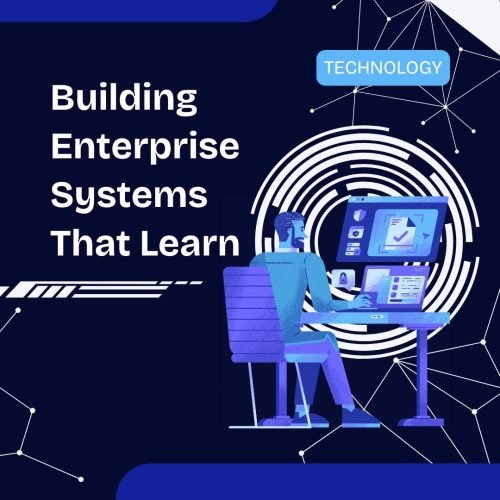
However, learning systems do not emerge from AI alone. They depend on:
- strong data foundations
- connected enterprise workflows
- architectural discipline
- governance and oversight
Organizations that combine these capabilities effectively will create systems that become more valuable over time. Not because they run faster but because they learn continuously.
The future enterprise will be powered by systems that do not simply execute instructions. They will help organizations adapt, evolve, and improve.