From ERP Systems to Intelligent Operating Platforms

For years, ERP systems have served as systems of record. They standardized operations. Centralized processes. Connected enterprise functions. But the next evolution has already begun. Enterprise platforms are becoming intelligence enabled operating environments. AI is changing how organizations interact with ERP systems. Not just through automation but through: predictive insights intelligent workflows contextual recommendations conversational […]
Enterprise Copilots: Where They Actually Deliver Value

Enterprise copilots are everywhere right now. Almost every platform is introducing one. Almost every enterprise is evaluating one. But behind the excitement, a more important question is emerging: Where do copilots actually create operational value? Because inside enterprise environments, usefulness is not measured by demonstrations. It is measured by: workflow impact decision speed operational efficiency

Modernizing Mission Critical Systems Without Breaking Operations

Every enterprise wants to modernize. Move to the cloud. Adopt AI. Improve speed and agility. But beneath that ambition lies a hardconstraint:Mission-critical systems cannot fail. These systems run: financial operations supply chains customer transactions compliance processes They are not just software.They are the backbone of the business. This is where many transformation initiatives struggle. Modernization

The Intelligence Layer: The Missing Piece in Enterprise Systems

Most enterprises today already have strong systems. ERP platforms. Product applications. Data warehouses. Operational workflows. These systems run the business reliably.But they were not designed to learn, adapt, or assist decisions in real time.That is what the AI era is changing.The shift is not about replacing enterprise systems.It is about introducing an intelligence layer across

Strong Data Foundations Enable Real AI

Many organizations begin their AI journey with models. But very few begin with data.This is where problems start. AI systems do not create intelligence on their own.They depend entirely on the quality, structure, and accessibility of enterprise data. When data foundations are weak: outputs become inconsistent insights become unreliable workflows become difficult to automate trust

From AI Pilot to Production: What Actually Changes

Many organizations today have successful AI pilots.A working demo.A promising use case.A small team proving value. But moving from pilot to production is where the real transformation begins. Because production AI is not just about models. It changes how enterprise systems operate. In pilot environments: data is controlled workflows are simplified risk exposure is limited

Why Most AI Initiatives Fail Inside Enterprise Systems

Most AI initiatives don’t fail because of the models. They fail because of the environment they are deployed into. Inside enterprises, AI is not operating in isolation. It sits on top of: Legacy systems Fragmented data sources Complex workflows Strict compliance requirements What looks like a promising AI use case in isolation often struggles when

From Digital Transformation to Intelligent Transformation

For the past two decades, enterprises invested heavily in digital transformation. They modernized infrastructure. Moved applications to the cloud. Built data platforms. Connected operations through enterprise systems. These efforts created digital capability. But the next shift is now underway.The conversation is moving from digital systems to intelligent systems. AI is not replacing enterprise software.It is

Engineering Intelligent Enterprise Systems in the AI Era

AI is not replacing enterprise systems.It is transforming them. Most organizations don’t need new software.They need their existing systems to become intelligent. The real shift isn’t from legacy to cloud.It’s from digital capability to embedded intelligence. AI Opportunity AI In the next 2–3 years, the opportunity is clear: Modernize data foundations Move from AI pilots

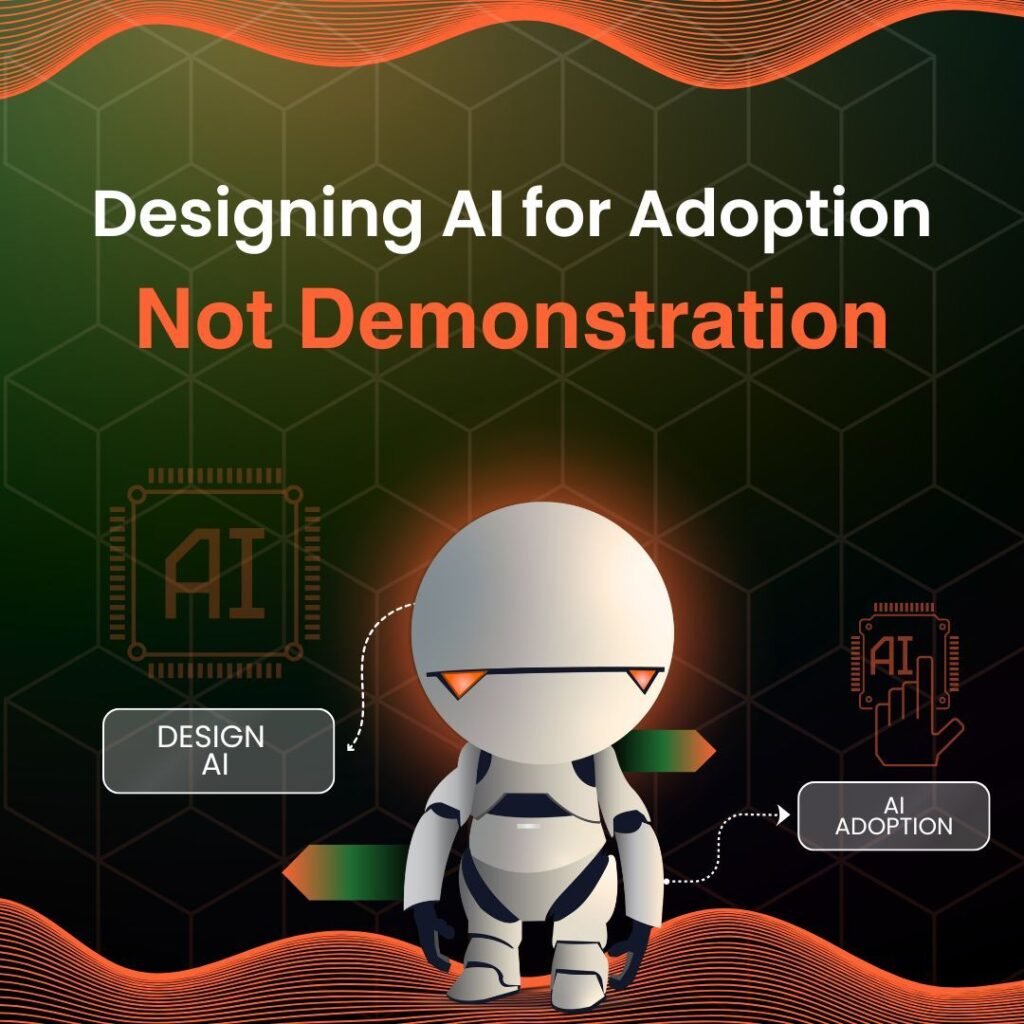
Designing AI for Adoption, Not Demonstration

The Problem With Demo First AIMost enterprise AI initiatives fail quietly. Not because the models are weak, but because the systems are never designed to be used. Dashboards look impressive. Proofs of concept win internal applause. But when AI lives outside daily workflows, adoption stalls and value never materializes. The mistake is subtle but costly: optimizing for

Scroll to Top